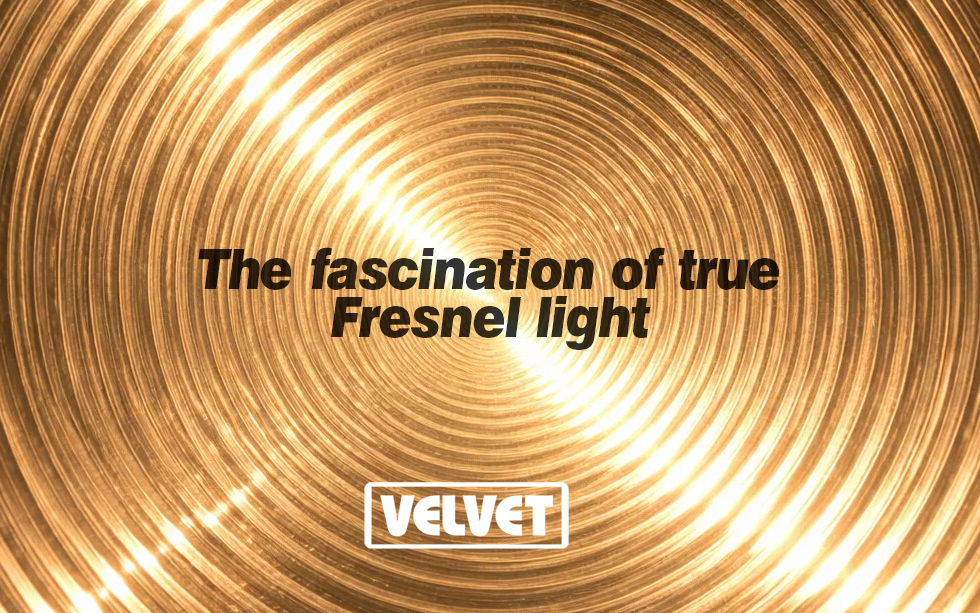
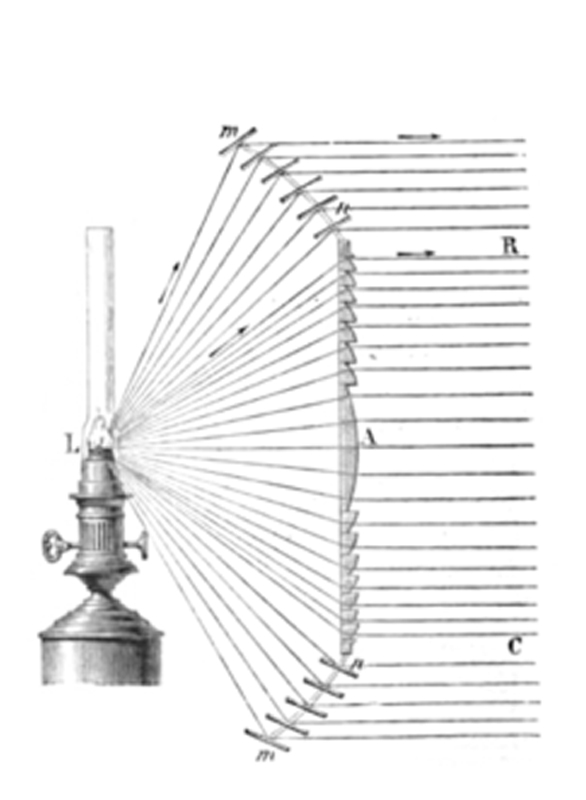
This story starts in France. Very long before LEDs, wireless control, or compact lighting fixtures, a visionary French physicist changed in XIX century the way we shape light forever. In 1822, Augustin-Jean Fresnel (1788-1827) set out a very real down-to-earth challenge in maritime navigation: how to throw a strong beam of light across great distances without having to use huge or extremely heavy lenses.
His answer was smart and elegantly simple, a lens made of concentric rings that dramatically reduced weight while keeping the light powerful and focused. Fresnel’s invention transformed lighthouse technology and, over time, became a real cornerstone of professional lighting for film, theatre, and television.

Skin tones retain depth, highlights roll gently, and contrast can be shaped precisely through spot-to-flood zooming.
What makes a Fresnel lens so special is its ability to behave like a large, traditional convex lens while staying relatively thin and lightweight. This allows fixtures to use large glass apertures with short focal lengths, producing a beam that is at the same time efficient and beautifully controllable. For lighting designers and cinematographers this is everything and it translates into something invaluable: a smooth, continuous beam with soft edges, rich texture, and natural, pleasant, fall-off.
Unlike harder optical systems, Fresnel lighting creates shadows that feel organic and dimensional.
This is why Fresnels luminaires remain a staple for DPs and gaffers around the world since many years ago even as lighting technology continues to evolve.
Real fresnels
It’s important to say one thing clearly: there are “Fresnels”, and then, there are Fresnels. Not every fixture labeled as “Fresnel” truly behaves like one real Fresnel. Adding a Fresnel adapter in front of an LED source is not the same as designing a luminaire that is natively Fresnel from the ground up in all its components and mechanics. True Fresnel fixtures are engineered around the lens, the light engine, and the optical path as a single system. This native approach is what delivers the characteristic beam texture, its uniformity, smooth zoom, and shadow quality professionals expect. Without it, the result is often a compromise visually and optically. It looks like but it not a trus Fresnel luminary.
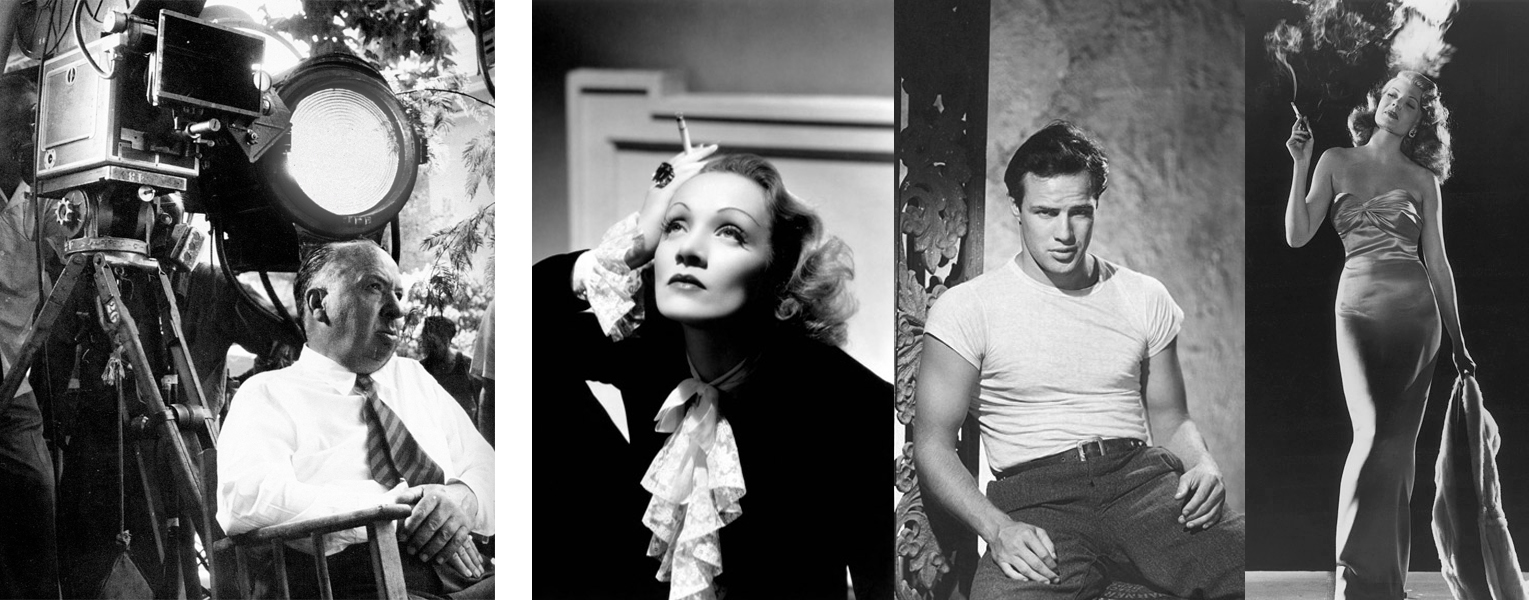
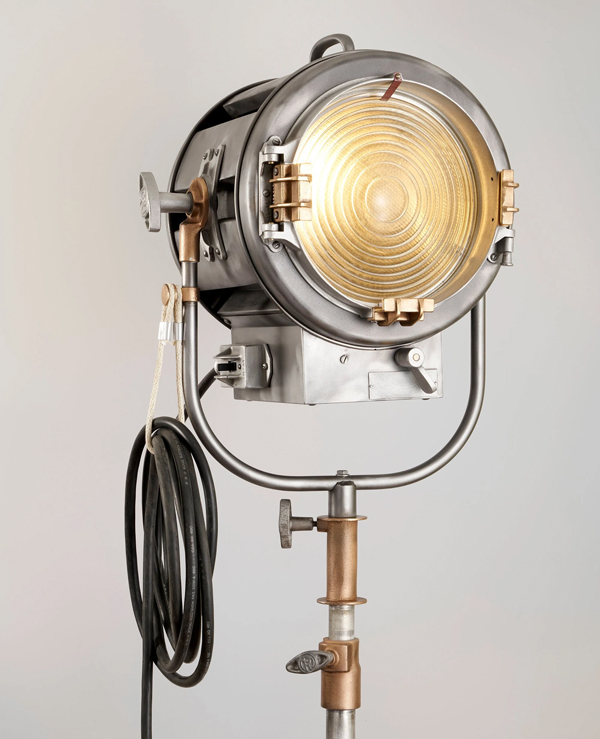
For decades, tungsten Fresnels, defined and shaped professional lighting. They delivered unmatched color rendition and a distinctive “aura” that many still associate with cinematic quality. The downside was its efficiency: high electrical power consumption, significant heat, and limited control.
The story continues today in Barcelona
In recent years, LED technology has transformed Fresnel lighting, making it up to five times more efficient than traditional tungsten luminaires. The real challenge has been preserving the soul of the Fresnel; the beam “allure”, its lighting texture, and above all, exceptional skin tone rendering.
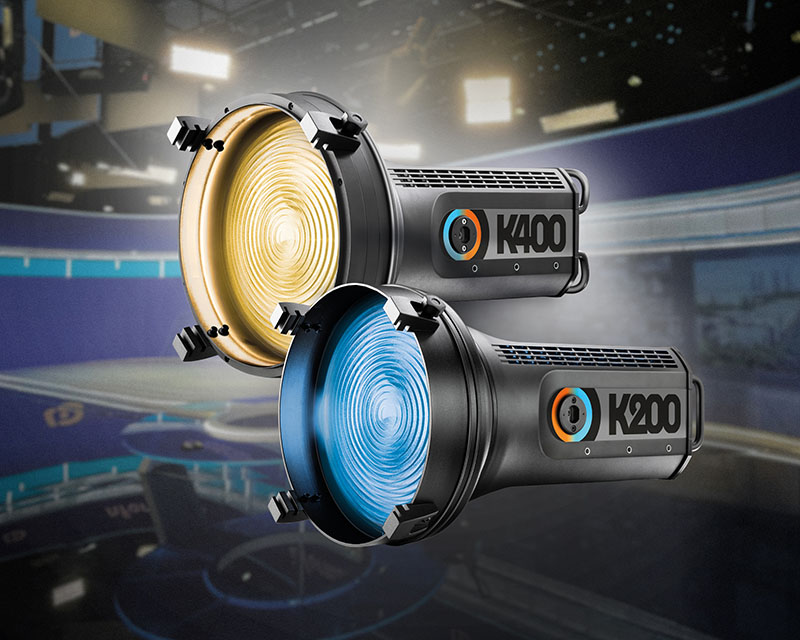
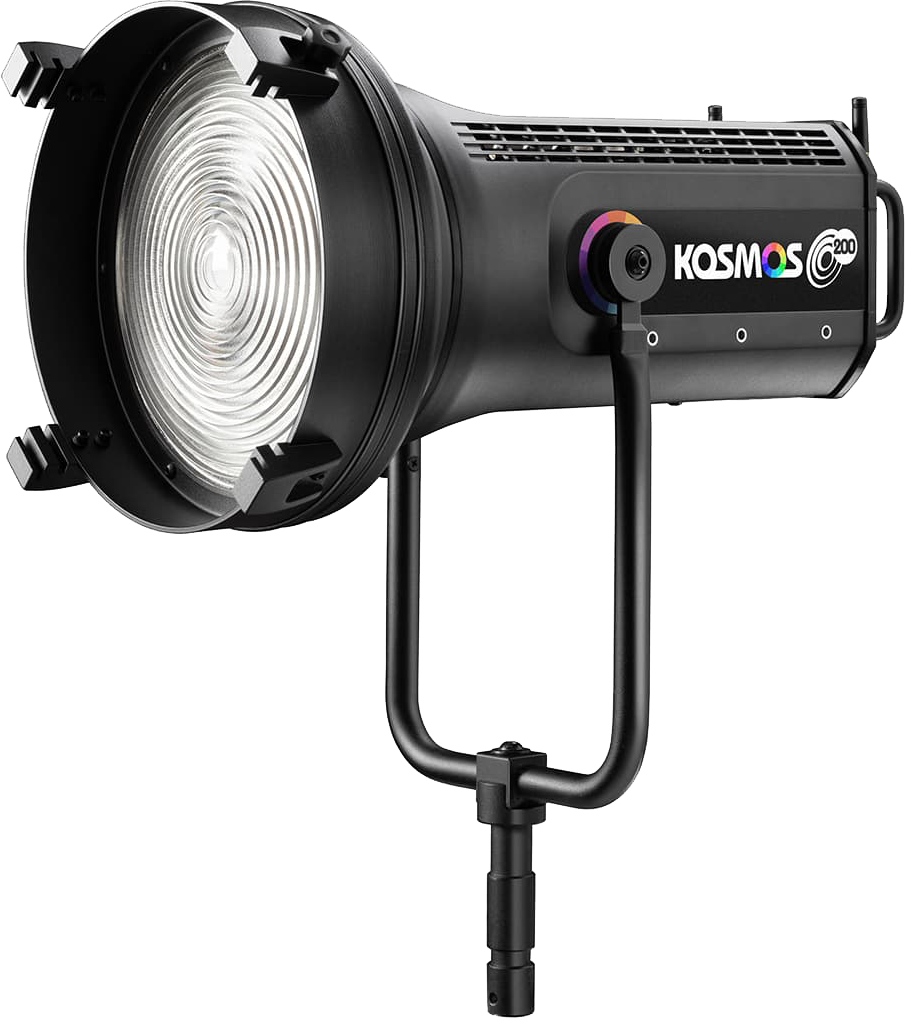
This is where VELVET makes the difference. Through deep optical and spectral development, VELVET has developed its new KOSMOS Bicolor series: true, native Fresnel luminaires equivalent to classic 1000 W and 2000 W tungsten lighting fixtures, but with modern efficiency and full control. Featuring perfectly large borosilicate glass lenses, motorized zoom, full DMX-RDM control, and precise Green/Magenta adjustment, VELVET’s bicolor Fresnels deliver authentic Fresnel performance with the flexibility and the practicality demanded in today’s productions.